Empowering change through stories: RCT’s Living Library

As a continuation of efforts to gather individuals who narrate their journey in the aspect of peace-building, for those who wish to listen and disseminate these stories, RCT has conceptualized the idea of the LIVING LIBRARY. The guests or ‘living books’ share with the audience details from their lives, aiming to inspire the audience and distribute stories different from what we are accustomed to seeing in the media.

The Living Library event is not just a gathering; it is an experience where attendees have the opportunity to directly engage with guests from all communities, to learn from their experiences, and gain insights into the challenges and triumphs of peacebuilding.
This time, the LIVING LIBRARY will be held at the YOUTH INITIATIVE HUB on Tuesday, February 8, starting at 2 PM. Our guests and “living books” this time are Dimitrije Obrenović and Rubija Redzepi, human rights activists who, for many years, in various ways, have contributed to the building of peace.
Please click here to see the event details and join us on Thursday for an amazing experience of sharing knowledge and stories

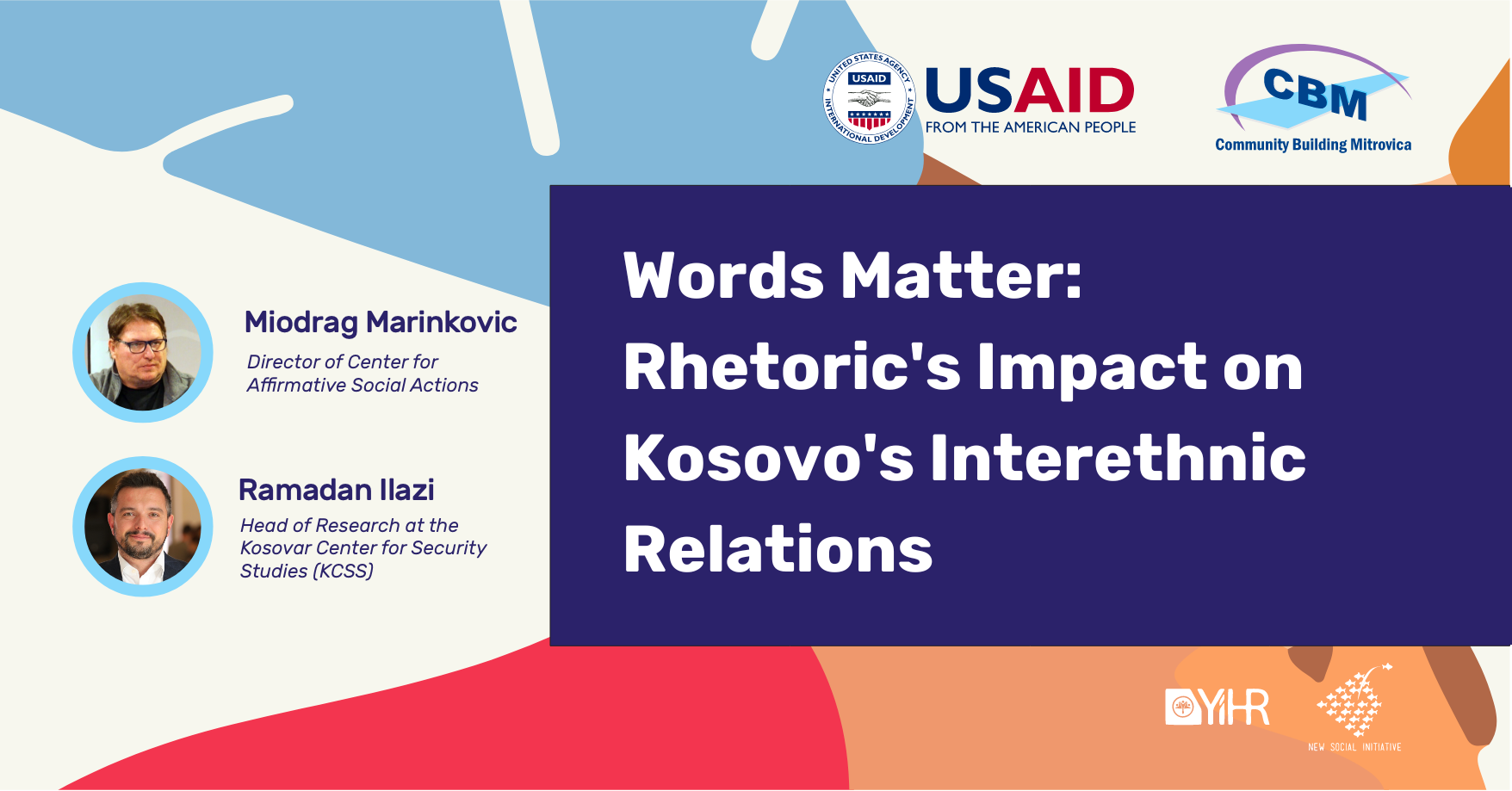
Words Matter: Rhetoric’s Impact on Kosovo’s Interethnic Relations

For decades, Kosovo has been caught up in a complex web of ethnic tensions, animosities, and regrettable instances of violence. Efforts towards reconciliation in such an environment have been negligible, even with a noticeable increase in support from the international community, which has allocated significant resources to foster conciliatory and cooperative dynamics within Kosovo society. Despite these efforts, the endeavor to build trust between communities seems to produce only limited results. Several factors contribute to this situation, including unresolved political issues, language barriers, cultural stereotypes, and more. 

However, one of the main inhibitors of the lasting trust-building process in Kosovo is the absence of social consensus toward achieving reconciliation. Social consensus involves a collective commitment to shared values and collaborative efforts among diverse social entities, aiming to cultivate a conciliatory social environment that prioritizes tolerance and cooperation. This dynamic relies on a cause-and-effect relationship, where the success of one group in building trust among communities’ hinges on the actions of other social actors pursuing similar objectives. The Kosovo case aptly illustrates these causal relations, showcasing how the positive outcomes of the civil sector’s active involvement in trust-building are often undermined by political tensions and conflicting rhetoric. For us working in civic sector, this cycle creates a perpetual, Sisyphean struggle.                                      

The fabric of Kosovo society lacks such a consensus. Each social actor pursues their own priorities, often sidelining universal values such as the pursuit of lasting peace, subduing them to other gains. When examining the attitudes of major actors in Kosovo’s social landscape towards reconciliation, the root of the problem can be identified. Civil society, regardless of being driven by a commitment to coexistence or a quest for funding, takes the lead and acts as a trailblazer of the reconciliation process. The business community is also on board, motivated by profit and unable to afford sentimental divisions. The media scene is a mixed bag, with some outlets upholding professional standards and striving for objectivity, while others propagate conflict-driven narratives to appeal to an already biased audience seeking higher ratings. Finally, there are political powerbrokers, the ones that bear the primary responsibility for shaping society and establishing value systems. 

It appears that the core issue behind the enduring ethnic conflict in Kosovo lies precisely in the hands of political leaders. In the current socio-political landscape of Kosovo and Serbia, ethnic conflict is seen as a political capital, a source of garnering votes. Consequently, politicians knowingly perpetuate existing ethnic tensions to achieve their objectives – increasing support within their electorate, mobilizing voters, or to downplay the criticisms from other sectors where they reveal subpar performance, such as the economy or fight against corruption. While exceptions naturally exist, the crux of this paradox is that these responsible voices, in Kosovo or Serbia, would typically fail to gather sufficient support to assume a leading role.  

The repercussions of these politically-driven narratives are extensive, triggering deep social divisions and institutional insecurity among a segment of the population. They create an environment conducive to ethnic violence and, more broadly, hinder a society’s capacity to forge lasting peace and stability – vital elements for sustainable development. These narratives tend to entirely cripple positive social processes, generating crises that bring interethnic interactions to a standstill. The prevalence of these political patterns in Kosovo exerts substantial societal pressure, compelling individuals into dichotomic perceptions. It fosters an ‘us versus them’ mentality, where one side perceives itself as virtuous and correct, while the other is labeled as flawed and misguided. The middle ground is dismissed, and compromise is viewed as a weakness. In this political dualism, there is little room for diverse opinions, nuanced interpretations, or objective criticism. Without such voices, society remains confined to a narrow range of perspectives, missing the opportunity to cultivate sustainable social cohesion.   

At the 2023 Civil Society and Think-Tank Forum in Tirana, concerns were raised about the Western Balkans’ political discourse impacting interethnic relations. The forum recommended that regional leaders modify their language to improve these relations. Supporting research (this report, this report and this report)  and surveys in Kosovo echo this, showing significant public concern about divisive political language, particularly in Kosovo-Serbia relations. A survey revealed that most respondents perceive the language used by leaders in interethnic matters as non-unifying or hostile, with 51% of Kosovo-Albanian and 61% of Kosovo-Serbian respondents categorizing it as hostile to some degree. Conversely, 41% of Kosovo-Albanians and only 8% of Kosovo-Serbians see this language as friendly. 

How to break this vicious circle? It’s a complex question. There are no quick fixes or groundbreaking solutions that we haven’t already considered as a society. An important aspect of this are media, which have an important responsibility not to sensationalize or amplify language that promotes ethnic divisions, or ‘othering’. The political dialogue process, seemingly nearing some kind of conclusion, based on indications from the EU, could be a significant boost in that direction, mitigating a key source of conflict. Yet, it won’t be enough. Over the years of conflict, deep-seated animosities have taken root in people’s minds. So, it is highly probable that while an eventual agreement on comprehensive normalization of relations will not magically erase all misunderstandings, stereotypes, and divisions, the first thing that must change for actual normalization to take effect in the ground is the language of political leaders from Kosovo and Serbia. We will have to navigate these challenges for the foreseeable future. What is essential is to persist in dialogue, cooperation, and a demand for accountability from all societal actors, even when it seems like it is not leading anywhere. Persistence is key. 


RAMADAN ILAZI, HEAD OF RESEARCH, KOSOVAR CENTRE FOR SECURITY STUDIES (KCSS)

MIODRAG MARINKOVIĆ, DIRECTOR OF AFFIRMATIVE SOCIAL ACTIONS (CASA)

ToR – WEB Development Trainer

Terms of Reference for Trainer

Call details:

About CBM:

      Community Building Mitrovica (CBM) is a local non-governmental organization (NGO) operating in the field of peace and community building in the wider region of Mitrovica, northern municipalities of Kosovo. The overall aim of CBM is to facilitate contact and dialogue between citizens in the whole of Mitrovica municipality. CBMs staff consists of devoted citizens – both Serbs and Albanians – who grew up in this region and want to restore the previous confidence and even friendship that war and politics have destroyed.

By supporting many concrete projects that address the direct needs of the local communities, CBM contributes in a modest way to this aim. The work of the past years has gained the organization a strong reputation on both sides of the Ibar river. Fields in which CBM works are: media, culture, youth, women, minorities, dialogue, and return of refugees and IDPs (Internally Displaced Persons).

CBMs projects are open to members of all communities living in Mitrovica and wider. CBM often cooperates with other NGOs, helps with local initiatives, and works with local governmental institutions and international organizations in order to initiate, develop, and implement activities, for the benefit of the communities, in Mitrovica and wider.

About the project: 

       The overall objective of the RCT Activity is to transform existing conflicts and build peace, predominantly among majority ethnic Kosovo Albanians and minority ethnic Kosovo Serbs by addressing present reconciliation needs on the individual, community, and institutional levels. The ultimate goal of the Activity is to contribute to having a society where there is proactive cooperation, peaceful co-existence, respect for various groups, and democratic values for all citizens. Additionally, an added value and effort through this Activity are to advocate for societal and institutional changes influencing public policies and ensuring good governance and respect for human rights. More so, socio-economic value is assisting local communities with social innovations that address societal challenges, whereas the local economy stakeholders are benefiting from the promotion of public-private partnerships. From the media promotion aspect, the RCT activity is helping communities stimulate sharing their diverse values. The project implementing partners are New Social Initiative and Youth Initiative for Human Rights Kosovo and is funded by US AID in Kosovo.

About the Call: 

      CBM is seeking a qualified and experienced trainer to teach webpage development to youth aged 18-28 from different communities in the Mitrovica region. The trainer will be responsible for designing and delivering an engaging and comprehensive training program that covers the fundamentals of webpage development, as well as best practices for user experience and responsive design. The trainer will be expected to provide hands-on demonstrations, practical exercises, and supportive guidance to ensure that participants develop a solid understanding of webpage development concepts and gain practical skills in designing and building websites. The workshop/training will be implemented during the “Hajde Bre” winter camp.

Duties and Responsibilities:
•Develop the basics of Webpage Development training methodology, activities, and schedule, and submit to   CBM for review and feedback.
•Conduct hands-on training sessions covering essential aspects of webpage development, both theory and practice.
•Foster a collaborative learning environment that promotes inclusivity.
•Evaluate participants’ progress and adjust teaching methods accordingly.
•Equip participants with foundational knowledge in webpage development.
•Show sensitivity and understanding towards the cultural, social, and economic backgrounds of the targeted youth.
•Submit narrative report after completion of the “Hajde Bre” camp.

Requirements:
•Bachelor or Master’s degree in a relevant field such as computer sciences, or a related discipline.
•Proven experience in webpage development and training.
•Familiarity with diverse backgrounds and cultural sensitivities.
•Ability to create an inclusive and participatory learning atmosphere.
•Strong ethical standards and adherence to professional codes of conduct.
•Proficiency in English language.

Skills:
•Excellent interpersonal and communication skills.
•Ability to work effectively with a diverse ethnic group of individuals, including staff and management.
•Strong organizational and time management skills.
•Strong analytical and problem-solving skills.
•Flexibility and adaptability in response to changing circumstances.
•Strong computer and technology skills.

Logistics: 
•Duration: Three days
•Location: Brezovica
•Dates: 16 – 18 February 2024
•Accommodation and meals: Provided for all participants and the trainer.

How to apply:

To apply for the position of trainer with CBM, please submit the following:
•A detailed CV including relevant education, work experience, and skills.
•Financial offer per day.

Interested applicants must send the require documents to procurement@cbmitrovica.org.

Please indicate the job title “Trainer – Application” in the subject line. Only shortlisted candidates will be contacted for an interview.

The deadline for application is: 07.02.2024

Hajde Bre! Winter Camp – Call for applications

Are you 18﹢and want to start learning web development?
Would you like to do this, while surrounded by like-minded individuals who share the same goals as you?
All of this, while enjoying the breathtaking views of Brezovica?
If yes, then THIS CALL is for you.

RCT Activity is organizing the THIRD EDITION of the winter camp.
Calling youngsters from 18+ to join us for a 3-day camp and learn about Webpage Development from scratch, in a beautiful setting in Brezovica.

What can you expect?

-Explore Key Concepts of Visual Design: Dive into the fundamentals of visual design principles.
-Gain New Knowledge about Webpage Development: Acquire practical skills that you can apply in real-world scenarios.
-Have Fun and Socialize: Engage in enjoyable learning experiences and connect with fellow participants through collaborative web design activities.

Don’t miss out on this opportunity! CLICK HERE to fill out the application below and embark on a journey of learning and creativity.

ToR – Expression of Interest for Printing Companies

Terms of Reference (ToR) for printing company

Project Title: Reconciliation and Conflict Transformation
Vacancy code: CBM/2/RCT
Post Title: Expression of Interest for Printing Companies
Duration: One (1) Year
Engagement: Service Contract
Announcement Date: 22.01.2024 Deadline for Application: 05.02.2024


Project Background

The overall objective of the project “Reconciliation and Conflict Transformation” is to help in the aims to transform existing conflicts and build peace, predominantly among majority ethnic Albanians and minority ethnic Serbs in Kosovo. The project will help communities on the individual level as it will assist in better mutual understanding of the differences and emphasize joint strengths, as well as on the policy level, where the impact of the project will influence amending policies that will address the reconciliation process among divided communities.

The project contributes to increased community engagement by creating a network of relatable role models closest to the population groups, such as influence people, community leaders, and others that they share the same value. Project activities will cover Mitrovica North & Mitrovica South Municipalities and after that, it will expand in whole Kosovo. The project implementing partners are the New Social Initiative and Youth Initiative for Human Rights Kosovo.

The Purpose

The purpose of this contract is to engage a company for the purposes of printing the design material for the Reconciliation and Conflict Transformation activity and contribute to the better visibility of the project.

Methodology and Scope of work

This section will identify the proposed methods for printing. Under the supervision and in close co-operation with the CBM the company will implement the following printing:

  •      •  5 x 200 – Two banner dimensions
  •      •  50 pcs notebooks – hard
  •      •  200 pcs notebooks – soft cover
  •      •  200 pcs pens
  •      •  200 pcs of Folders
  •      •  50 tote bags

The design of the printing is available, and it will be shared with a selected company. The draft of the design will be shared with CBM and discussed for any potential correction.

Criteria

  •      •  Strong experience track record of development and delivery of printing material
  •      •  Demonstrated a high level of professionalism and an ability to provide the best quality compared to the price
  •      •  Ability to work under the timeline stated in the contract
  •      •  Ability to be timely responsive in communicating with hiring organization in order to meet the requirements

Deadline and submission of expression of interest

Invitees and interested companies to submit the following documents by February 5, 2024. The interested parties should submit the following documentation:

  •      •  An example of similar pieces of work completed recently.
  •      •  Itemized financial proposal.

Interested parties should send documentation stated above in this document to procurement@cbmitrovica.org

Evaluation and Selection Process

This application is open to all interested parties that meet the abovementioned criteria.  The selected contractor will be responsible for executing all the activities described in this TOR in collaboration with CBM.

The selection process of the expert will be based on the set of criteria developed by CBM Evaluation Committee to evaluate the proposals. The Evaluation Committee will evaluate the proposals by choosing the best quality compared to the price.

ToR_Expression of Interest for Printing Companies_PDF

Bardhyl Dobroshi – Storytelling in a form of podcast

Bardhyl Dobroshi, was born and raised in Mitrovica with a profound love for art in general and is a great example of the fact that such passion can be used to make significant changes. His initiation into graffiti began in his teenage years, and since then he has not been separated from this passion. When asked “WHY?” the answer came naturally: because the city of Mitrovica needed colors, it lacked the uniqueness that only art could create.

Listen more about his inspiring journey:

This was the last podcast of 2023, as part of the Storytelling component.
This event was a part of the Reconciliation & Conflict Transformation Activity, implemented by Community Building Mitrovica and partners from New Social Initiative and Youth Initiative for Human Rights – Kosovo, and supported by the American people through USAID Kosovo.

Bridging cultures, building friendships: A cultural visit unites youth in Peja/Peć

Since the process of building relationships between young people of different communities begins with communication, it is important for us to continuously build and expand the communication channels. To achieve this goal, in November of last year, RCT organized the establishment of the Cohesion Circle in Peja (the sixth CC in Kosovo). Activists, youth workers, and active citizens from various ethnic backgrounds in Peja gathered to discuss the needs and challenges of the youth  and to plan their first initiative. This is where the idea originated, and subsequently, the cultural visit to Peja was organized, with about 80 young people from all communities from Mitrovica and Peja participating.

The cultural visit started with a tour city around the center of Peja. The participants were accompanied by the Cohesion Circle leader, Redzo Kojic, who showed around the city and the old bazar. The participants had the possibility to hear about the history of the streets, the architecture throughout the years of the buildings, the changes that the street encountered between years, the history of local shops and so on. Afterwards, we went to visit the mosque in the city center and spent some time inside by interacting with the locals there and listening about the history of the mosque, its foundation and how it survived throughout the years. It is important to highlight that for several participants it was the first time that they hear about the history of cultural sites of Peja and we can admit that the participants had high motivation on learning and asking different questions.

Afterwards, the participants had the chance to work in groups and come up with an initiative that will result as an initiative from the Cohesion Circle members. This initiative aims to address inclusivity and bring together youth from different ethnic backgrounds in order to create together this initiative. Due to this, participants resulted to give powerful and interesting ideas starting from culture, art, social gathering, and so on which was aiming to address the need of brining all communities in one place, hence foster reconciliation. Following the visit to mosque, we headed all together to have lunch where the participants networked with each other. They had the chance to talk about the places that they prefer to visit on their hometowns, what they like to do in their free time and how by learning the cultural differences among each other can foster the inter-ethnic dialogue.

The cultural visit continued at the Decani Visoki Monastery. The visit was a wonderful experience for all participants as it was the first time that the majority of the participants visit a monastery. We were welcomed by the priest of the monastery who dedicated his time to explain and tour the monastery with us. He talked about the history, its foundation and its services to the community. In addition, afterwards we were welcomed to have drinks and snacks and to socialize with each other where we continued our talk on the different and similar cultures that our communities represent.

The cultural visit achieved its goal on bringing together youngsters from different ethnic backgrounds in order to listen and learn about each other’s cultural sites and traditions. By bringing the youngster in one place and offering the environment to share their opinions freely and exchange ideas, we believe that the conflict transformation and inter-ethnic dialogue process can be achieved, step by step.


RCT Annual Advocacy Conference

As we know, the process of building relations between different communities in Kosovo is not easy and requires a lot of effort. A considerable amount of work has been done in this direction, for more than 2 decades now, but there is still a lot to do. In different periods, different approaches and general efforts are required, in order to see results. The problems change depending on the events that happen, and it is important to identify them first, before we can talk about concrete steps. 

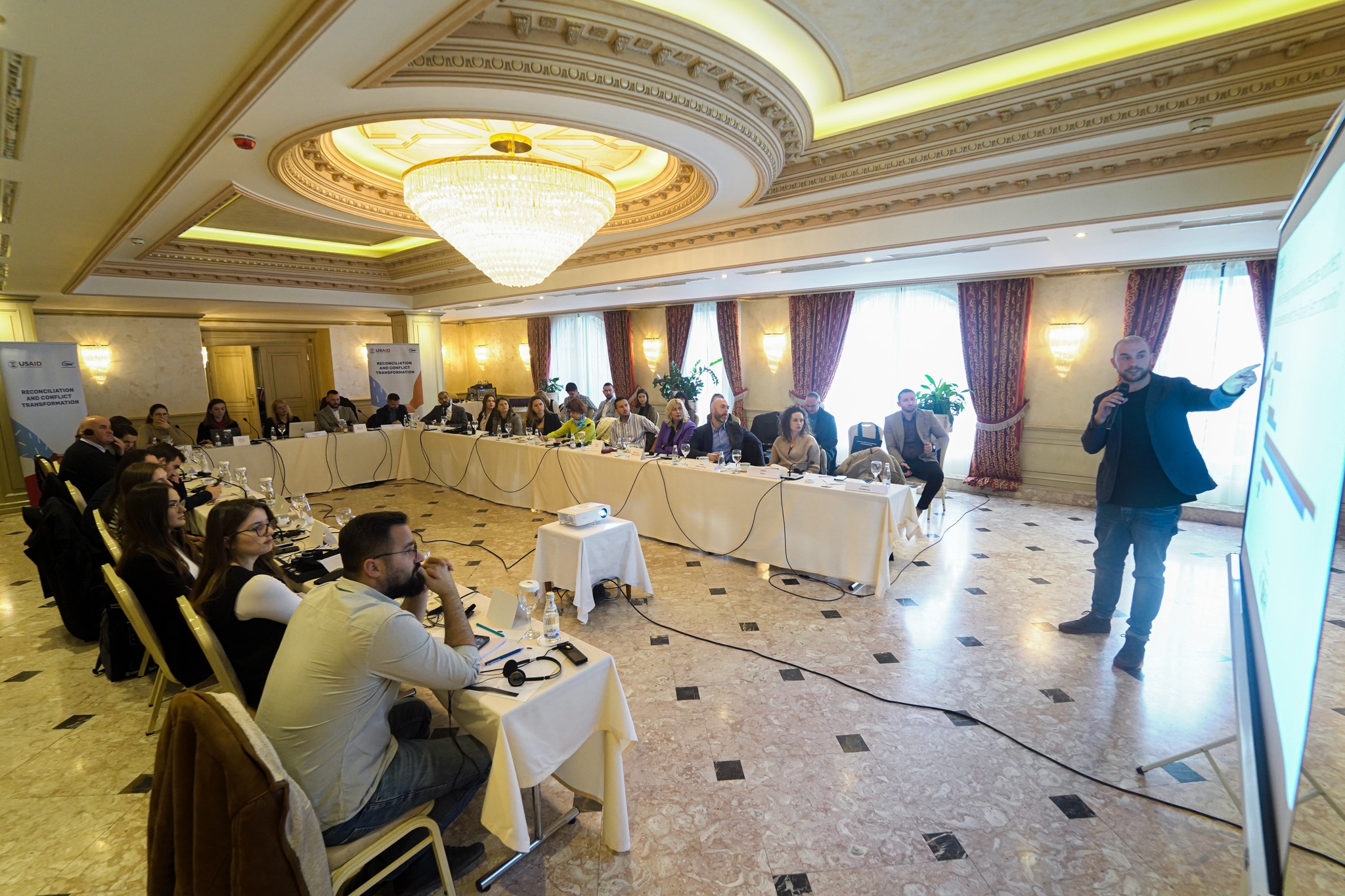
In furthering efforts to identify optimal solutions for present challenges, RCT Activity supported by the American people through USAID Kosovo, inaugurated its Annual Advocacy Conference. The main goal was to produce a policy document, oriented at legislative solutions pertaining to the current problems related to community cohesion. The conference brought together government representatives, international organizations, civil society actors, journalists, and other parties to produce a policy memorandum that will be advocated on. Attendees provided numerous recommendations upon the necessary work of different stakeholders such as local and central government, security institutions, media, international actors, CSOs and other actors involved. 

This conference had three main sessions. 
In the first session, the findings from research conducted by the Think and Do Tank were presented by one of the original researchers, Flamur Abazi. This presentation focused on the key findings of the research, points that had the potential to open a discussion, while also reflecting the perceptions of the Kosovo citizens of all communities living in the Mitrovica region. 

The second session was conducted as a panel discussion consisting of one representative from a public institution, two CSO representatives from the Kosovo Albanian and Serbian communities and one representative from the international community with a professional background in conflict resolution. Prompted by questions from the conference attendees, the panelists referred to the findings of the research and drew from their professional experiences to give their opinions on the current political and security situation in Northern Kosovo. Attendees provided numerous recommendations upon the necessary work of different stakeholders such as local and central government, security institutions, media, international actors, CSOs and other actors involved.
Additionally, they analyzed the current state of interethnic relations in the Mitrovica region. This session served as a precursor to the final session, which was outcome oriented. 

The concluding segment of the conference fulfilled its primary objective: producing a policy document aimed at legislative solutions related to the problems identified in the research. Following the research presentations from the ‘Think and Do Tank,’ along with participant analysis and discussions, a document was compiled. This document aims to address the primary needs in regulating relations between communities.

View recommendations HERE!

Shikoni listën e rekomandimeve KETU.

Pročitajte preporuke OVDE!

After the conclusion of the conference, RCT Activity is ready to embark on its next crucial phase: advocating and lobbying for the implementation of the recommendations presented to the relevant institutions. These steps signify a commitment to translating discussions into tangible actions, in order to sustain our momentum towards fostering positive change within the community. 

SMALL SCALE GRANT SCHEME: Social space innovations

TERMS OF REFERENCE

The RCT Activity is opening a small-grant call for grassroots organizations, formal, registered organizations, to address the needs related to trust-building, reconciliation and conflict transformation among communities in Kosovo.

• Maximum Grant Amount: $16,000.00

• Number of Grants Supported: 4 (Each grant is $4,000.00)

• Application Deadline: January 17, 2024

Where to apply: email at procurement@cbmitrovica.org with mail subject: RCT Grant Scheme: Social Space Innovations, Name of the applicant

Grant Scheme – SOCIAL SPACE INNOVATIONS

Grant Scheme – APPLICATION FORM

Grant Scheme – BUDGET FORM

Grant Scheme – WORK PLAN

Overall Objective of the Reconciliation and Conflict Transformation Activity

Addressing present reconciliation needs between different ethnic groups in Kosovo on the individual, community, and institutional levels. The ultimate goal of the Activity is to contribute to having a society where there is proactive cooperation, peaceful co-existence, respect for various groups, and democratic values for all citizens. Additionally, an added value and effort through this Activity are to advocate for societal and institutional changes influencing public policies and ensuring good governance and respect for human rights.

I. Purpose of the Call
This call is designed to support projects and efforts that encourage the innovative use of social spaces that facilitate open and constructive dialogue, promote mutual respect, and foster greater understanding among communities.
Additionally, this call aims to advance sustainable change for a lasting impact in communities by creating networks among communities and promoting positive social norms.
To apply, eligible applicants can expand on these objectives and provide specific examples of how their proposed initiatives align with the goals of the grant call. In addition, applicants will need to provide details on their eligibility, and the timeline for the grants, as well as any other pertinent information necessary for the successful completion of their applications.

II. Rules and Regulations for this call

 i. Who can apply

• Grassroots organizations, and formally registered organizations in Kosovo, with a minimum operational period of 12 months before the deadline for the submission of the proposal, operating in the regions of Mitrovicë/Mitrovica, Prishtina/Priština, Gjilan/Gnjilane, Prizren, and Pejë/Peć.
•Individuals who are part of the Cohesion Circles, an informal group of citizens and civil activists who are part of RCT Activity.


ii. Eligibility Criteria

To be eligible for financing, applicants should:

• Be active NGOs, with demonstrated engagement in carrying out its mission, objectives, and programs;|
• Be registered as a domestic non-governmental/non-for-profit organization, according to the Kosovo legislation;
• Be fully responsible for project implementation. Partnerships with other NGOs are allowed, only if the leading organization takes full responsibility for project implementation and management, including execution of all project expenditures;
• Have relevant capacities and experience working with communities that have experienced conflict or tension, and in promoting reconciliation, dialogue, and social cohesion, with regards to the proposed project;
• CC members must apply in cooperation with a grassroots organization thatpromotes inter-ethnic social cohesion, by integrating cross- community contact and confidence-building into aims and activities.

The applicant may act alone or in partnership with another partner organization. In the case of a partnership, the collaborating organization must also fulfill the eligibility criteria outlined for the primary applicant.

Applicants who meet these eligibility criteria will be considered for the grant. However, meeting these criteria does not guarantee that an applicant will receive funding, as the selection process is competitive and based on a range of factors, including the quality and feasibility of the proposed initiative.

iii. Application Forms, Operations and Costs

a. Narrative Proposal
The proposed projects should target the thematic areas of the call for proposals and aim to deliver concrete results that feed the overall goal of the RCT Activity. Applicants must clearly state the objectives and expected outcomes of their proposed social space initiative and provide a detailed plan for achieving these goals.

Narrative form should not exceed 6 pages; The proposal should contain sufficient information for an independent reader to understand exactly what the applicant wants to achieve.

 b. Budget Proposal
The total grant allocation for project proposals in this scheme is 16,000 USD, distributed among the implementing partners. Each participating non-governmental organization (NGO) is eligible for a maximum grant amount of 4,000 USD.
Budget Justification: Applicants must present budgets that are directly and exclusively related to the successful implementation of the proposed activities. Therefore, all prices/costs should be realistic and should be in line with market prices for proposed actions and staff payments. It is imperative that the budget be distributed logically and is approved by the two or more parties applying to this call. Below, you can find the list of expenses that are included/ accepted and those that are not included/ accepted. Community Building Mitrovica (CBM) has the right to request modifications/budget changes if the need arises.

 c. Eligible Costs
All costs must be clearly stated in the initial form of the budget and must occur during the implementation phase of the project activities:
• Expenses for staff members; including payments for experts, and individuals directly involved in the implementation of the activity;
• Compensation for travel and food for those involved in the project, and for the purpose of implementing activities as provided in the application;
• Expenses for the purchase of supplies related to the proposed activities;
• Prices of bank fees related to the activities listed in the application;
• Expenses that come directly from the requirements of the Contract (dissemination of information, specific evaluation for the Activity, accounting, auditing, translation);
• Office operating expenses such as rent, utilities, telecommunication, maintenance, stationery, hygienic products, office equipment repair, and cleaning.

 d. Ineligible Costs
The costs presented below are considered ineligible:
• Debt and debt services (interest);
• Expenses that occur before the implementation phase of this grant, and/or after the end of its duration;
• Provisions for future losses or potential liabilities;
• Expenses declared by the beneficiary (s) and financed by other grants;
• Purchases of land or objects;
• Value Added Tax (VAT).

Applicants hold full responsibility for the correctness and accuracy of the proposed budget including arithmetical errors, inaccuracies, unrealistic costs and ineligible costs.

  e. Timeline
The proposed duration for the implementation of the proposed projects shall be a maximum of 4 months. The implementation of the selected projects is expected to start in February/March 2024. If projects are proposed to start later, they are to be finalized at the latest by June 2024.

  f. Visibility
Applicants must be prepared to publicize the fact that they are financed within the framework of the Reconciliation and Conflict Transformation Activity. Applicants must be prepared to acknowledge specific donors’ visibility guidelines and regulations.


III. Submission of Applications
Please follow all instructions below carefully to apply for the Social Space Innovations Grant. Proposals that do not meet the requirements of this announcement or fail to comply with the stated requirements will be ineligible:

• Proposals should be submitted with forms available and provided within this call; application form that includes the logical framework and plan of activities, and budget proposal, which will be in USD;
• All applications must be written in English;
• Certificate of registration (for NGOs and institutes), as a legal entity in Kosovo, with the Department of Registration and Liaison of NGOs within the Kosovo Ministry of Public Administration;
• Tax administration certificate on entity obligations;
• 2023 Official tax declaration or audit report, if available;
• Record of project history (brief outline of past projects from the last two years. It should be no more than 2 pages, (if applicable);
• Memorandum of Understanding (MoU) with partner institutions or other relevant actors, if applicable;
• Any annexes should be clearly marked and referenced in the body of the application.

All applications should be submitted via email to procurement@cbmitrovica.org with the mail subject: “RCT: Social Space Innovations Grant”. The deadline for submission of applications is 17 January 2024.

We recommend that applicants carefully review the eligibility criteria and grant requirements before submitting their application. If you have any questions or need assistance with the application process, please do not hesitate to contact us at procurement@cbmitrovica.org.


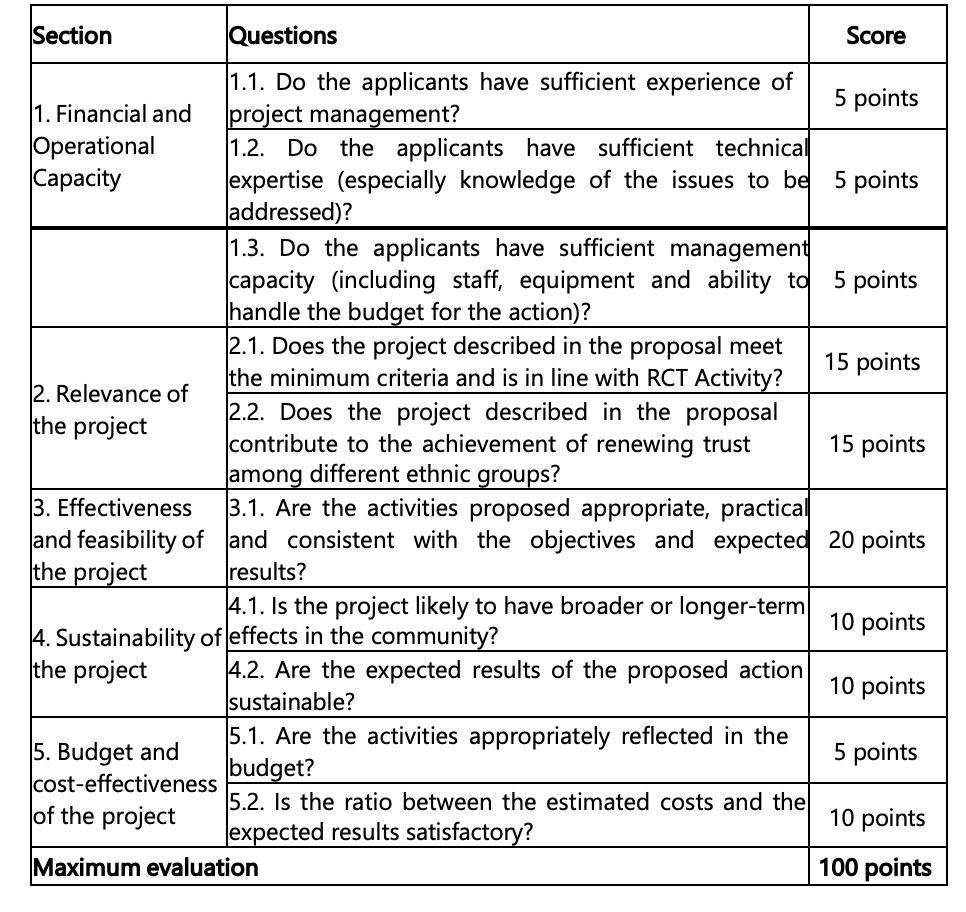
IV. Evaluation and Notification

 i. Evaluation process

ii. Review and Selection

A Grants Review Committee will evaluate all eligible applications. This Committee will consist of three (3) individuals and will evaluate and select all eligible applications. The committee will be composed of individuals who are not in any way connected with the overall implementation of the Reconciliation and Conflict Transformation Activity.

V. Important Tentative Dates


page5image10498432

page5image10500928 page5image10500160 page5image10500736page5image10486528


page6image10908800 page6image10908992page6image10909184 page6image10909376 page6image10911104 page6image10911296page6image10911488


WE ARE HIRING: Grants and Monitoring Officer

Terms of Reference for Grants and Monitoring Officer 


Vacancy details: 


About CBM: 

Community Building Mitrovica (CBM) is a local non-governmental organization (NGO) operating in the field of peace and community building in the wider region of Mitrovica, northern municipalities of Kosovo. The overall aim of CBM is to facilitate contact and dialogue between citizens in the whole of Mitrovica municipality. CBMs staff consists of devoted citizens – both Serbs and Albanians – who grew up in this region and want to restore the previous confidence and even friendship that war and politics have destroyed. 

By supporting many concrete projects that address the direct needs of the local communities, CBM contributes in a modest way to this aim. The work of the past years has gained the organization a strong reputation on both sides of the Ibar river. Fields in which CBM works are: media, culture, youth, women, minorities, dialogue, and return of refugees and IDPs (Internally Displaced Persons). 

CBMs projects are open to members of all communities living in Mitrovica and wider. CBM often cooperates with other NGOs, helps with local initiatives, and works with local governmental institutions and international organizations in order to initiate, develop, and implement activities, for the benefit of the communities, in Mitrovica and wider. 

About the project: 

The “Reconciliation and Conflict Transformation” (RCT) Activity is implemented by Community Building Mitrovica (CBM) and partners from New Social Initiative – Nova društvena inicijativa, and Youth Initiative for Human Rights – Kosovo, and supported by the American people through USAID Kosovo. The overall objective of the RCT Activity is to transform existing conflicts and build peace, predominantly among majority ethnic Kosovo Albanians and minority ethnic Kosovo Serbs. This initiative is helping communities on the individual level by assisting in better mutual understanding of the differences and emphasizing joint strengths, as well as on the policy level, where the impact of the RCT Activity is influencing amending policies that are addressing reconciliation processes among divided communities. More so, socio-economic value is assisting local communities with social innovations that address societal challenges, whereas the local economy stakeholders are benefiting from the promotion of public-private partnerships. From the media promotion aspect, the RCT activity is helping communities stimulate sharing their diverse values. 

CBM is seeking for a qualified individual to fill the position of Grants and Monitoring Officer for the “Reconciliation and Conflict Transformation” Activity. 

Job Description: 

Under the overall supervision of the Chief of Party and Deputy Chief of Party, the Grants and Monitoring Officer (GMO) will oversee all the activities with the subgrantees. The GMO will be responsible for managing grants within the RCT grants scheme, with a focus on enabling compliance, and monitoring grant implementation, always ensuring adherence to CBM and donor policies and procedures. This position requires a dynamic individual with strong organizational, analytical, and communication skills.  

Specifically, the GMO will: 

•Facilitate the application process for small grants (including providing guidance to potential applicants, reviewing applications, and ensuring completeness and compliance with eligibility criteria); 
•Support the process of the evaluation of the grant proposals based on predefined criteria and guidelines, and collaborate with a selection committee or RCT team to assess and select projects for funding;
•Prepare grant agreements and contracts for selected projects, outlining the terms and conditions, reporting requirements, and budget guidelines;
•Regularly monitor grant implementation to ensure grantees are complying with grant agreement terms, reporting requirements, and project timelines;
•Conduct site visits or regular check-ins to assess progress, address challenges, and offer guidance;
•Review and collect regular progress reports and other documentation from grantees, and report grantee project achievements, challenges, highlights, and impact;
•Develop reports based on specific grantees to the Chief of Party and Deputy Chief of Party;
•Coordinate with the MELP Consultant for activity reporting, and offer guidance and technical assistance to help grantees strengthen their organizational capacity and meet project objectives;
•Maintain effective communication and collaboration with grantees, address grantee inquiries, concerns, and provide necessary support throughout the grant period; 
•Identify potential risks or challenges in grant implementation and work with grantees to develop mitigation strategies, and address any issues related to grant compliance and organizational performance;
•Establish and maintain productive and collaborative working relationships with partners, grantees, and program stakeholders.
•Coordinate communication and monitoring activities between grants/subcontracts, finance, and RCT team, as needed.
•Perform other related duties, as required.


Requirements: 

•Educational background in Management, Administration and/or relevant fields;
•Experience in grants management, preferably in (NGO/INGO) sector;
•Good knowledge and experience in program implementation (USAID funded programs are an asset);
•Proficient in written and spoken English (Albanian and/or Serbian is an asset);
•Demonstrated ability to track and administer partner budgets and alignment with donor regulations.
•Ability to collect and input data- into computerized databases and spreadsheets and analyze data and information.
•Ability to organize tasks simultaneously and prioritize work;
•Ability to adapt to changing circumstances, unexpected challenges, and evolving project dynamics, ensuring the continued success of the reconciliation and conflict transformation activities.
•Demonstrated high level of professionalism;
•Ability to work independently and responsibly;
•Professional communication skills, both verbally and in writing in Albanian and English;
•Attention to detail and problem-solving skills;
•Ability to proactively address potential issues;
•Computer literate in Microsoft Word, Excel, Email and PPP;
•Ability to drive, and have valid driving license: B.
•Positive attitude and willingness to support and assist colleagues.


Additional information:
•Only complete applications will be taken into consideration.
•Only shortlisted candidates will be contacted for the interviews.


How to apply:
Interested applicants must send their cover letter and updated CV to  procurement@cbmitrovica.org: 

•Curriculum Vitae;
Motivational letter (specifying, your relevant qualifications for this specific position and your motivation to work at Community Building Mitrovica); All documents must be submitted in English.

Note:Please use “RCT: Grants and Monitoring Officer – Job Application” as the subject of your email.